A healthcare diagnostic
How we found the real problem behind ten failed hires at a Kalaburagi clinic.
A dermatology clinic can have excellent doctors, satisfied patients, and strong demand and still lose control of the patient journey before the consultation even begins.
That was the situation we found at Vitalis Healthcare — and the problem was never hiring.
10
Receptionists in six months
90%
Online booking & handling
5
Languages answered
Situation
The problem looked like a receptionist problem. It wasn't.
Context
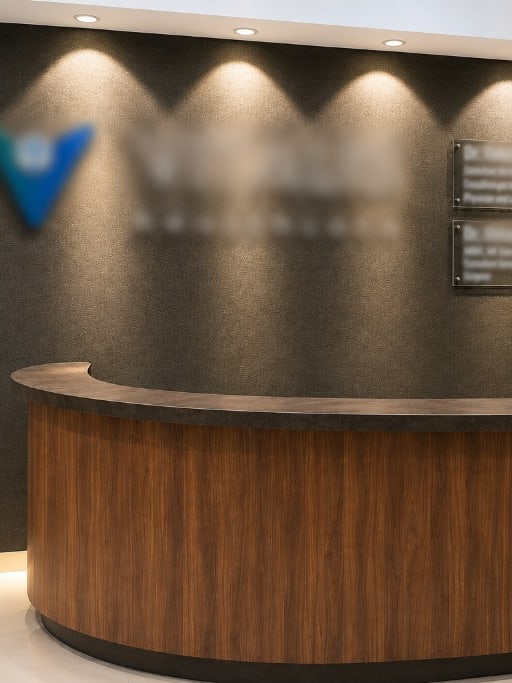
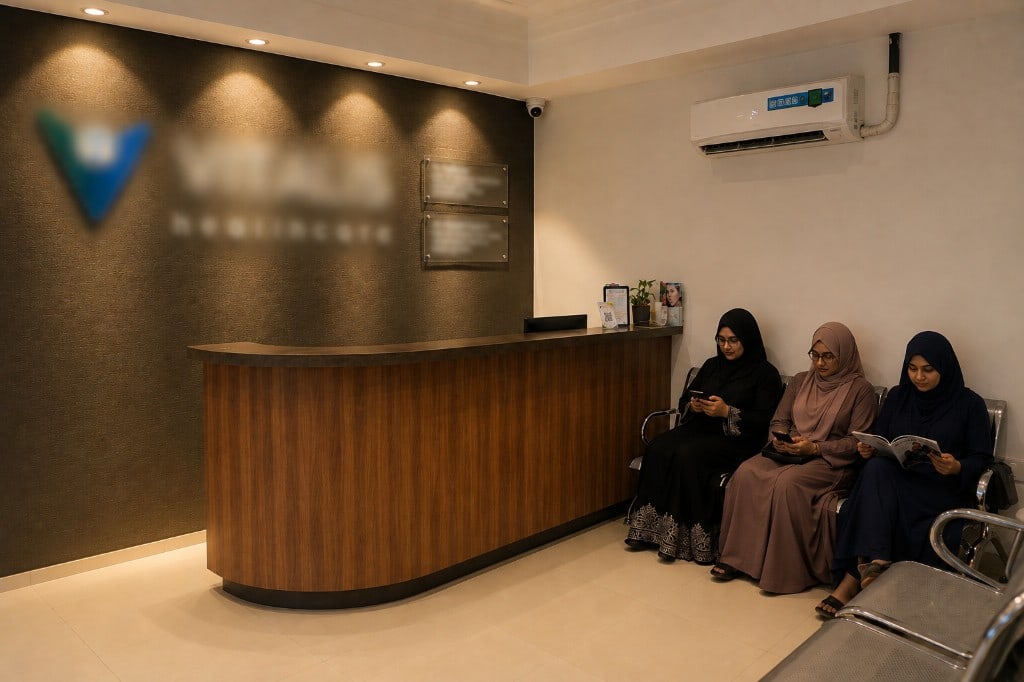
Vitalis Healthcare is a dermatology practice in Kalaburagi. Over the previous six months, the clinic had replaced its receptionist almost 10 times.
Each replacement was supposed to solve the same problem: handling patient enquiries, booking appointments, managing leads, and keeping records.
Kalaburagi is also a city that does not speak one language. A patient may open a conversation in Urdu, or Kannada, or Hindi, or Telugu, depending on who they are and where they grew up. Enquiries arrive through calls, through walk-ins, through social media, through WhatsApp, at all hours of the day.
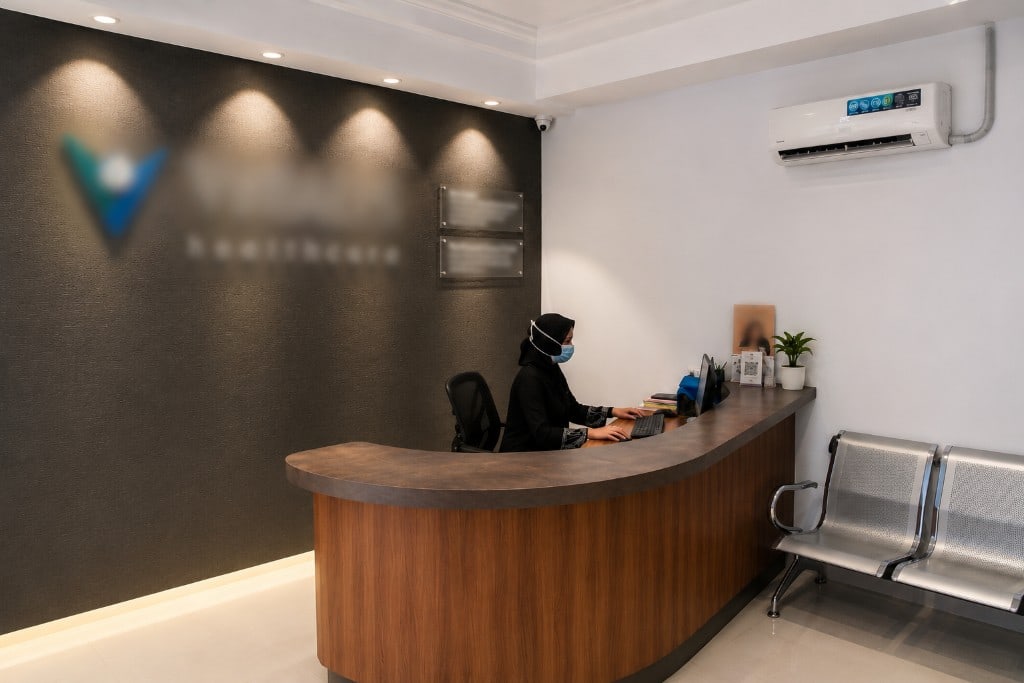
The clinic was trying to solve all of this by putting one person at a desk. But the problem kept returning.
What was missing was control between the enquiry and the consultation.
The clinic was receiving enquiries. The doctors were doing their part. The demand was there. The clinic was not necessarily losing patients because of the consultation. It was losing visibility before the consultation.
What We Found
The issue was not simply that the receptionists were inexperienced.
The function itself had become too dependent on individual handling. A receptionist had to:
- Respond to incoming enquiries.
- Understand what the patient needed.
- Record patient details.
- Track leads.
- Check appointment availability.
- Book slots.
- Handle follow-ups.
- Respond across multiple languages.
- Manage additional questions from patients.
- Keep track of conversations and active bookings.
When one person handled all of this manually, the operation became difficult to control.
Some enquiries could wait. Some couldn't. Some bookings were active. Some were still requests. Some patients needed follow-up. And some conversations simply went quiet.
What the Blindness Cost
The clinic had built a strong clinical reputation and was steadily spending it at the front desk.
Patients do not separate the doctor from the process. A patient who cannot get a straight answer about a slot does not conclude that the reception system is weak. They conclude that the clinic is disorganised, and they say so publicly, in the same places where new patients are looking.
The lost enquiries were worse, because they left no trace. An enquiry that was never logged cannot be counted, followed up, or missed. The clinic could not measure what it was losing, so it could not feel the size of it. Only the complaints were visible. The silence was not.
And the owner's attention — the scarcest resource in any founder-led business — was going into a hiring cycle that could not have worked, because it was aimed at the wrong problem.
That is a dangerous position for any growing business.
If the owner has to depend on individual memory to understand the operation, the operation is already difficult to control.
Solution
Not a smarter person at the desk. A desk that does not depend on who is at it.
Our Objective
We did not set out to replace the receptionist.
- Create a reception function that could consistently capture, understand, record, and move patient enquiries towards an appointment.
- Make the reception function independent of whoever happens to be sitting at the desk.
- Every enquiry, in any language, at any hour, should end up as a record with a name, a date, and a purpose — and either a confirmed slot or a flagged exception for a human to handle.
Design Principle
Four rules shaped the build.
- Meet the patient where they already are. No app, no portal, no new number to learn. WhatsApp is already open on the patient's phone. The system goes there.
- Answer in the language the patient opened with. Language is the patient's choice, not a staffing constraint. The interaction can happen in Hindi, English, Urdu, Kannada, and Telugu.
- No conversation ends without a record. When a patient comes in as a lead or enquiry, the conversation captures their name, purpose, date, requirement, and other relevant information.
- Never fail silently. Anything the system cannot resolve — a photo of a condition, an unusual request, a question that needs clinical judgement — is tagged and surfaced to a person. An exception is visible. A dropped enquiry is not.
So the technology was designed around that workflow, not the other way around.
A feature existing and a task happening are two different things. Most software projects confuse them.
What Changed
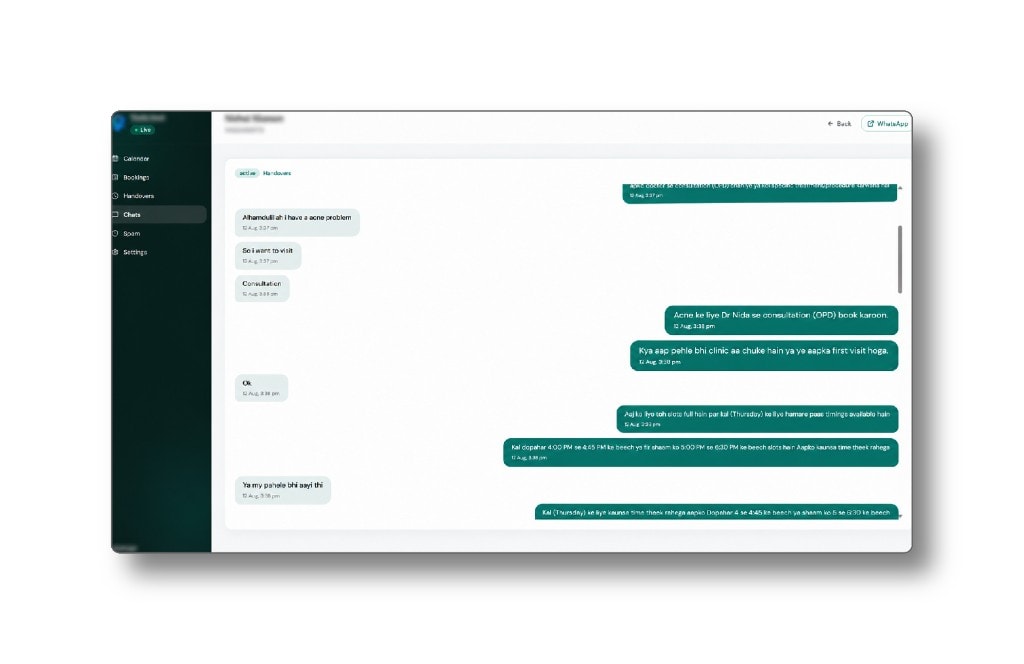
An enquiry arrives on WhatsApp in whatever language the patient uses. The conversation continues in that language. Through it, the details are captured: who this is, what they need, when they want to come.
The system checks the live calendar, offers what is actually available, and confirms the slot. The booking exists in the clinic's records the moment it is made — not when someone gets around to writing it down.
When a patient sends a photo and asks what should be done, the system does not guess. It captures the case, tags it, and puts it in front of a human.
Follow-ups run on their own schedule rather than on someone's memory.
The process became less dependent on someone remembering what needed to happen next.
Results
The clinic did not need a better receptionist.
The New Operating Rhythm
Once the system was implemented, the reception function began operating differently. An enquiry at eleven at night is handled at eleven at night, and appears in the morning as a booking rather than a missed call.
The clinic is now actively using the system, with online patient booking and handling being managed 90% by the chatbot.
More importantly, patient follow-ups and proper booking systems are now happening consistently.
The Bigger Shift
Most family businesses hire against a process gap. Something is not working, so a person is added. When that person cannot fix it, a better person is added.
The clinic initially appeared to have a people problem. But replacing almost 10 receptionists in six months was already evidence that the problem was deeper. When the same operational problem survives multiple people, the first assumption should not always be that the people are wrong.
It needed reception to exist as a system before anyone was asked to run it. The clinic moved from trying to find the right person to perform the function to building a function that could operate consistently.
Measured outcomes
- Receptionist turnover 10 replacements in six months — the function no longer depends on who sits at the desk
- Online booking & handling 90% now managed by the chatbot
- After-hours enquiries Handled at 11pm, appear as bookings in the morning — not missed calls
- Follow-ups Run on their own schedule rather than on someone's memory
- Languages Hindi, English, Urdu, Kannada, and Telugu — the patient's choice, not a staffing constraint
- Records Every enquiry ends as a record with a name, a date, and a purpose
Closing Insight
The clinic did not have a shortage of receptionists.
It had a reception function that depended too heavily on receptionists.
Before you hire for a role again, look at how many times you have already hired for it.
If the answer is more than twice, you are not short of people. You are short of a process — and the next hire will discover that on your behalf, and then leave.
Emilda & Co. works with founder-led businesses to find what is actually breaking before deciding what to build. From Chaos to Control.
Get started